Poison Apple Embroidery Design
As an embroidery designer and product reviewer, I’ve evaluated countless machine embroidery designs. Poison Apple stands out as a versatile and visually striking option that can elevate a wide range of projects. Its bold imagery and thematic appeal make it ideal for Halloween, but its design elements also work well beyond seasonal use.
First Impressions: A Bold Statement with a Dark Twist
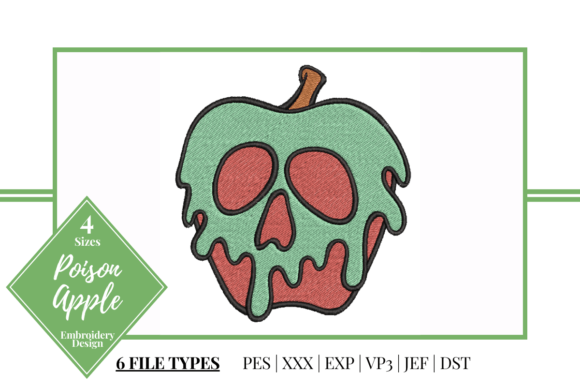
The Poison Apple design immediately grabs attention with its dramatic, slightly ominous aesthetic. The central apple is rendered in a way that feels both classic and modern, with clean lines and a sense of balance. The overall layout is simple enough to work on a variety of fabric types and project sizes, yet detailed enough to add visual interest without overwhelming the space.
This design has a strong visual personality. It’s not subtle, but that’s part of its charm. It works best when used as a focal point rather than an accent. The shape and theme suggest a connection to Halloween, but its versatility allows it to fit into other themes like fantasy, gothic, or even whimsical decor pieces.
Real-World Use: From Tote Bags to Baby Onesies
I tested Poison Apple on several common embroidery projects. On a tote bag design, it added a unique flair that would stand out in a craft fair or boutique setting. The size and detail made it suitable for a medium-sized hoop, which is great for small business owners looking to produce multiple items efficiently.
On a sweatshirt, the design looked crisp and professional. The stitch density was appropriate for a commercial project, and the satin stitch gave a smooth finish. For baby clothes, I found that the design worked well when scaled down, making it a good choice for personalized gifts or nursery decor.
When used as an embroidered patch, Poison Apple retained its clarity and impact. It could easily be sewn onto jackets, backpacks, or caps, adding a stylish touch to custom apparel. The design also translated well into printable mockups, helping sellers visualize how it would look on different products before production.
Where to Be Cautious: Fabric and Fit Considerations
While Poison Apple is adaptable, there are some situations where it may not perform as well. On small hoop sizes, the details can become cramped, making it harder to maintain stitching accuracy. If you’re working with textured fabrics, such as canvas or denim, the design might not sit as smoothly as it would on a flat surface.
Thin or stretchy fabrics can also pose challenges. The design requires a proper stabilizer to prevent puckering or distortion. On dark fabrics, the thread colors may need adjustment to ensure visibility. If you're planning to use this on layered garments or curved surfaces like caps, test it first to see how the stitches interact with the fabric's shape.
For projects that will be washed frequently, such as kitchen towels or baby onesies, consider the durability of the stitches. While Poison Apple is likely to hold up well, it’s always wise to do a small test run before committing to a larger batch.
Visual Appeal and Customer Perception
One of the strongest aspects of Poison Apple is its ability to catch the eye. In a crowded marketplace, a design that stands out can make all the difference. Whether it’s used on a holiday gift, a boutique product, or a personalized item, the design adds a level of sophistication that appeals to a broad audience.
From a customer perspective, the design conveys quality and intention. It suggests that the handmade product or custom apparel was thoughtfully created. This can enhance trust and increase the perceived value of the finished product, especially for Etsy sellers or small shop owners looking to build a loyal customer base.
For commercial embroidery projects, Poison Apple offers a reliable and recognizable design that can be used across multiple items. Its adaptability makes it a valuable addition to any digital embroidery file collection.
Practical Designer Notes: Testing and Preparation
Before using Poison Apple in a real project, I recommend testing it on scrap fabric. This helps you understand how the stitches behave on your chosen material and whether the thread colors contrast well. Pay close attention to the stitch density—too much can cause bulk, while too little may result in a weak appearance.
Check the hoop size required for your machine. If the design is too large for your current setup, consider scaling it down or adjusting the placement. Inspect the small details carefully, especially if you plan to use it on a product that will be viewed up close, like a baby item or a decorative pillow cover.
Test the design in black and white mockups to see how it looks without color. Compare it against both light and dark fabric backgrounds to ensure visibility. Using the right stabilizer is crucial, especially on delicate or stretchy materials.
If you’re planning to sell finished items or digital products, confirm the licensing terms. Even though the product description mentions that colors can be altered, it’s important to verify what rights you have to use the design commercially.
Conclusion: A Versatile Design for Creative Entrepreneurs
Poison Apple is more than just a Halloween-themed embroidery design—it’s a flexible tool that can be used in a variety of creative contexts. Whether you're crafting personalized gifts, building a craft business, or creating small shop merchandise, this design offers both style and practicality.
With careful consideration of fabric type, hoop size, and stitch settings, Poison Apple can become a standout element in your embroidery projects. Its bold visuals and adaptability make it a smart choice for designers looking to add a touch of drama and uniqueness to their work.